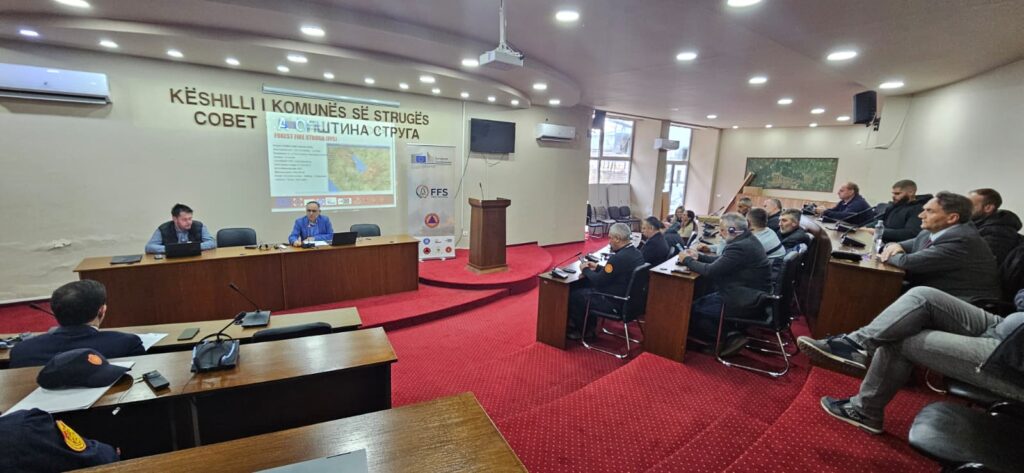
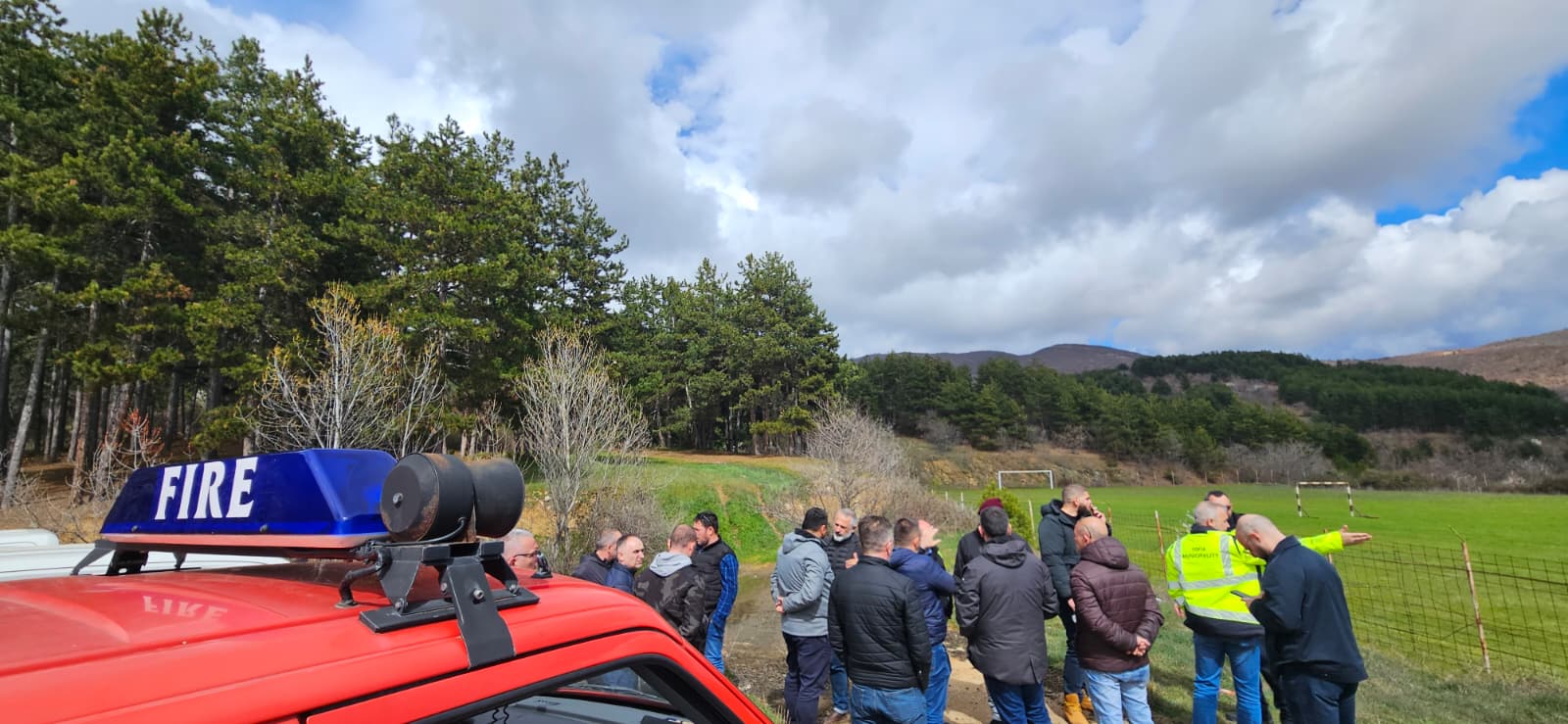
Last week, project partners came together in Skopje, Struga, and Ohrid for a key field visit within the Forest Fire Struga (FFS) project, implemented under the EU Civil Protection Mechanism. The visit marked an important milestone in advancing cross-border cooperation and strengthening preparedness for wildfire response in the Western Balkans region.
The mission focused on addressing complex challenges related to wildfires in protected and remote areas, including cross-border coordination, cascading effects, and operational constraints in difficult terrain, key issues that are increasingly relevant across Europe.
Key highlights of the visit included:
- Alignment on project objectives, deliverables, and next implementation steps
- Exchange of operational experiences and national practices in wildfire response
- In-depth discussions on a realistic cross-border wildfire scenario
- Initial planning of the upcoming Full-Scale Exercise (FSX)
- On-site visits to the planned exercise areas in the Struga–Ohrid region
The field visit provided valuable insights into local conditions and operational realities, helping to ensure that upcoming project activities, particularly the FSX, are grounded in realistic scenarios and tailored to the needs of participating countries.
It was particularly encouraging to see the strong level of engagement, collaboration, and shared commitment among all project partners:
- Protection and Rescue Directorate of the Republic of North Macedonia
- Center for Development and Democratization of Institutions (CDDI)
- Voluntary Firefighting Society “Bajram Miftari” Skopje
- Ministry of Interior of Montenegro
- European University Cyprus
- Resilience Solutions
- Center for Security Studies (KEMEA)
- National Civil Protection Agency (Albania)
- Sofia Municipality
Together, partners are contributing to strengthening regional resilience, enhancing interoperability, and improving preparedness for increasingly complex wildfire risks driven by climate change.